Showing posts with label Reading. Show all posts

Monday, September 24, 2012

Win a Chapter Critique!

Hi Guys!

I just stopped in to share some good news - I'm currently writing for a site named, Nerd Appropriate!

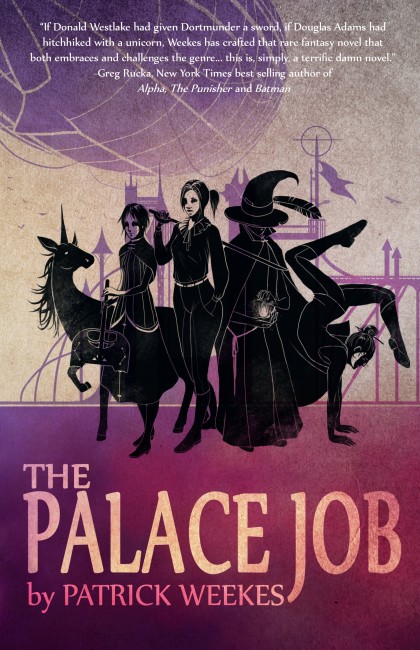
Better yet, we're running a contest to win a chapter critique from awesome BioWare writer, Patrick Weekes in celebration of his new book titled, The Palace Job!

All you have to do to win is answer this simple question:

What is your favorite thing about unicorns?

Easy, right? Visit my review page and then answer the question in the Comments section.

You can also tweet your answer to @NerdAppropriate or leave a message on our Facebook page!

Be sure to check out the site for all your nerdy needs and listen to our weekly podcast!

Good luck!

@hilaryheskett

Tuesday, January 19, 2010

I Was a Bit Hasty...

Right about now I should be stuffing my toes in my mouth. Having just finished Fallen by Lauren Kate, it's clear the logic in my last post was a little flawed. Angels can be hot. Well, obviously not all of them. The pudge-r-iffic cherubs are not in any way hot. And it's never time for androgyny. (Yes, that was a SNL reference.)

Feathery attachments excluded, the book reeled me in with its disturbing setting and multifaceted characters. Ms. Kate did a fantastic job letting me, the reader, discover each person’s past. She shows, not tells, folks.

If you’re looking for some great dark and romantic YA, Fallen is the book for you.

Plot Summary:

There's something achingly familiar about Daniel Grigori.

Mysterious and aloof, he captures Luce Price's attention from the moment she sees him on her first day at the Sword & Cross boarding school in sultry Savannah, Georgia. He's the one bright spot in a place where cell phones are forbidden, the other students are all screw-ups, and security cameras watch every move.

Even though Daniel wants nothing to do with Luce--and goes out of his way to make that very clear--she can't let it go. Drawn to him like a moth to a flame, she has to find out what Daniel is so desperate to keep secret . . . even if it kills her.

Thursday, January 14, 2010

The Angel Thing

After reading Hush, Hush, I got to thinking. (Yep, that little hamster’s still going strong.) What’s the deal with the new angel trend?

Maybe being brought up in a Baptist household changed my perception of God’s heavenly henchmen, but I don’t think there’s anything sexy about angels. Between androgynous representations like in “Constantine” (awesome movie) and the chubby cherubs seen in paintings, I don’t find hunky man-dude with feathery appendages. And about the feathers, that’s just weird. They’re like birdmen, but not. Have you seen a bird molt?

I heard someone say that angels are the new vampires. Granted, the idea of a fallen angel makes sense due to their lack of wings and sinful nature (and who doesn’t like a story about redemption?) but it’s hard for me to imagine falling in love with your guardian angel.

Let’s break this down –
1 – He’ll always be more beautiful than you with his sparkly essence and/or flowing robes of white.

2 – He’ll always make you feel bad for sinning, so you’d better get your guilt on.
(My internal editor just evacuated.)

3 – He’ll never age while you’ll continue to deteriorate. Vampires are cool because they can make you one too. I don’t see angels handing out seraph-dom.

On the flipside, the idea of sacrifice works. All I can hear right now is Sara McLachlan and it’s killing me – I’m getting there – “City of Angels” is a good example of this. Guardian angel throws away eternity to be human. Okay. I get it.

But I’m still creeped out by the feathers.

What do you think?

Disclaimer: I did enjoy Hush, Hush.

Tuesday, January 12, 2010

YA Reading Fest

Over the past four days I've read four books. Yes, four: Hush, Hush, Shiver, Graceling, and Fire.

Now before you get all "she has no life" on me, you have to realize these books are unbelievably addictive. All of four engaged me, but Graceling and Fire stood out as my favorites. Both are by author Kristin Cashore.

Graceling:


Plot Summary:

Katsa has been able to kill a man with her bare hands since she was eight—she’s a Graceling, one of the rare people in her land born with an extreme skill. As niece of the king, she should be able to live a life of privilege, but Graced as she is with killing, she is forced to work as the king’s thug.


She never expects to fall in love with beautiful Prince Po.

She never expects to learn the truth behind her Grace—or the terrible secret that lies hidden far away . . . a secret that could destroy all seven kingdoms with words alone.

My Impression:

I LOVED it and devoured the book within hours. All of the characters breathed (figuratively, of course), the plot moved at the right pace, and the writing transported me into Kristin Cashore's world. The romantic elements hooked me instantly, not to mention all the fight scenes!

What an amazing debut! (Yes, two exclamation points back-to-back. It was that good.)


Fire:


Plot Summary:

She is the last of her kind...

It is not a peaceful time in the Dells. In King City, the young King Nash is clinging to the throne, while rebel lords in the north and south build armies to unseat him. War is coming. And the mountains and forest are filled with spies and thieves. This is where Fire lives, a girl whose beauty is impossibly irresistible and who can control the minds of everyone around her.

My Impression:

This story still haunts me. When I started it, I'd just finished Graceling, so the bar was set very high. I loved the idea of "monster" things -- Cashore's descriptions and ideas about her world improved from her first book. There was a more mature theme with this one, which I appreciated, and the relationships between characters were less straight-forward as in Graceling. Overall, Fire was a darker, more complicated book. I loved it.

My Impression of the Author:

She has a distinct style in which she uses a repetition of sentences beginning with the same pronoun or word, most often "she" or "the". Cashore uses this device several times in both books and it works. It seems to emphasize a growing intensity to the succession.

Her settings are phenomenal and I love that all of her characters have flaws. Both books do have a happily-ever-after, but not in a cookie-cutter kind of way. Sacrifices have to be made and not everyone lives.

In sum, Kristin Cashore is now one of my favorite authors. I hear she's working on a new book titled Bitterblue. Can't wait!

Thursday, September 17, 2009

Book Review: The Lost Symbol

I've been reading at a frantic pace recently. I'm not sure if it's some kind of procrastination tactic to keep me from writing and editing, but the upside is that I've read some great books. Mental and creative recharge, right?

Last night I finished The Lost Symbol by Dan Brown. Masons and killers and myths, oh my!


Plot:
In this stunning follow-up to the global phenomenon The Da Vinci Code, Dan Brown demonstrates once again why he is the world’s most popular thriller writer. The Lost Symbol is a masterstroke of storytelling--a deadly race through a real-world labyrinth of codes, secrets, and unseen truths . . . all under the watchful eye of Brown’s most terrifying villain to date. Set within the hidden chambers, tunnels, and temples of Washington, D.C., The Lost Symbol accelerates through a startling landscape toward an unthinkable finale.

As the story opens, Harvard symbologist Robert Langdon is summoned unexpectedly to deliver an evening lecture in the U.S. Capitol Building. Within minutes of his arrival, however, the night takes a bizarre turn. A disturbing object--artfully encoded with five symbols--is discovered in the Capitol Building. Langdon recognizes the object as an ancient invitation . . . one meant to usher its recipient into a long-lost world of esoteric wisdom.

When Langdon’s beloved mentor, Peter Solomon--a prominent Mason and philanthropist--is brutally kidnapped, Langdon realizes his only hope of saving Peter is to accept this mystical invitation and follow wherever it leads him. Langdon is instantly plunged into a clandestine world of Masonic secrets, hidden history, and never-before-seen locations--all of which seem to be dragging him toward a single, inconceivable truth.

My Review:
Short chapters and a major plot twist? Awesome. Suspense was present from the beginning and compounded throughout the entire novel. Brown's characters seemed believable and each had very distinct mannerisms. However, the dialogue wasn't always as distinctive and I had to go back a few times to figure out who was talking.

As with The Da Vinci Code, Brown filled narrative sections with enticing bits of legend and history. Personally, I loved it, but if you're not into conspiracy theories or Freemason folklore, this may cause you to skip ahead.

Overall, the plot sucked me in and I couldn't put the book down. Twists and turns abounded in this story set in our nation's capital.

Grade: A-

Sunday, June 28, 2009

Unforgettable Story of Forgetting

Whew! I completed the second week of my consulting gig and believe me, I am tired. I'd forgotten what a set schedule can do to a person. I mean, who gets up before 11am?

Oh, right. I do now.

Anyway, I finished reading a fantastic novel this week titled, The Story of Forgetting.

Plot:
Told from two perspectives that are at once nearly polar and intimately linked, this astounding debut captures an air of the fantastical while presenting one family's heartfelt battle with Alzheimer's. Seth Waller is a 15-year-old Austin, Tex., science nerd determined to discover the reason behind his mother's recent mental breakdown. Abel Haggard, living on his family farm just past the Dallas suburbs, is an aging recluse roiled by memories of his one true love: Mae, his brother Paul's wife. The two had a torrid affair while Paul served in Korea, forcing Mae to conceal the paternity of her baby when she became pregnant. Both Seth and Abel speak of a fantasy land named Isidora, which exists outside of our physical world, but which becomes a common thread in piecing this delicately woven story together. Each character is a product of a different time and place, but as Seth delves deeper into his scientific investigation and Abel's troubled life is further revealed, the two stories meet in an emotional and memorable climax. Block displays an innate gift for developing believable characters each with his own distinct voice. The result is a story that's compulsive and transporting.

Review:
Though sometimes highly scientific, the story, with its tense subject matter and character interactions, moved at a terrific pace. I remained riveted from the first page onward. The interjections of Isidora, a fairytale passed down through generations, flowed along the main plot like a bubbling stream winding through a meadow.

From a writing perspective, the technique was clean and effective. I felt like I knew the characters and empathized with them at every step.

A word of caution – this book is not for a young audience. There are mature themes as well as lengthy descriptions of a disease that kills mental function at an early age.

Side Note:
This is author Stephan Merrill Block's debut novel. Amazing.

Grade: A-

Saturday, June 20, 2009

Deliverance Dane

Now that I have a day job, my rate of finishing books has stalled a bit (as has my blog post cadence). The days of reading at my leisure between episodes of "I Love Lucy" and "Oprah" have been replaced by moments of hastily plowing through passages during lunch breaks and before bed. Welcome to the real world, me.

Enough with the pity party. The Physick Book of Deliverance Dane intrigued me and I looked forward to our daily rendezvous.

Plot: Harvard graduate student Connie Goodwin needs to spend her summer doing research for her doctoral dissertation. But when her mother asks her to handle the sale of Connie’s grandmother’s abandoned home near Salem, she can’t refuse. As she is drawn deeper into the mysteries of the family house, Connie discovers an ancient key within a seventeenth-century Bible. The key contains a yellowing fragment of parchment with a name written upon it: Deliverance Dane. This discovery launches Connie on a quest—to find out who this woman was and to unearth a rare artifact of singular power: a physick book, its pages a secret repository for lost knowledge. As the pieces of Deliverance’s harrowing story begin to fall into place, Connie is haunted by visions of the long-ago witch trials, and she begins to fear that she is more tied to Salem’s dark past then she could have ever imagined.

Written with astonishing conviction and grace, The Physick Book of Deliverance Dane travels seamlessly between the witch trials in the 1690s and a modern woman’s story of mystery, intrigue and revelation.

Review: I was hooked from the very beginning. The Salem witch trials have always fascinated me so I started the book wanting to completely lose myself in the story.

The pace slowed toward the middle and since I'm not one who obsesses upon academia, some of the tension between Connie and Professor Chilton seemed dry. Also, Connie’s love interest, Sam, didn't come alive for me. The chemistry between them was like flat Diet Coke.

However, the story exploded toward the end when all of the clues came together and Connie discovered her history. As the pace picked up with the 1690's timeline, the 1990's story also quickened. The Deliverance Dane plotline (1690's) amazed me and made me not able to put the book down.

Side Note: Katherine Howe, the author, is related to Elizabeth Proctor, who survived the Salem witch trials, and also Elizabeth Howe, who did not.

Grade: B-

Tuesday, June 9, 2009

“Pulp Faction” Book

As you may have guessed, I’m an avid reader. I started Family Plots: Love, Death & Tax Evasion at the dentist office last Friday morning and finished it a few hours later. It was that good.

*WARNING* This book will make you cry.
Set in the San Francisco Bay Area (sigh), Mary weaves a tale full of intrigue and suspense in a fabric laced with joy and sorrow. Part fact and part fiction, she calls her creation the first of a new genre: Pulp Faction.

Plot: Family Plots is a fresh and funny autobiographical novel about a young mother trying against all odds to create a normal family life with her new husband, a criminal attorney, who-it turns out-is committing a few crimes of his own. The novel offers readers a wry, unsentimental account of a marriage barreling toward calamity. In an attempt to find romance, family, and financial stability, its struggling heroine stumbles into a world of pseudonyms, fake weddings, and hidden bank accounts. Events that land many of the players into the family cemetery plot also reveal unexpected secrets and stashes that manage, in small ways, to transform a tale of seeming tragedy into one of surprising healing and redemption.

Side Note: Mary Patrick Kavanaugh was kind enough to attend my critique group a few weeks ago with the purpose of showing us the ins-and-outs of marketing and self-publishing our works. A dynamic speaker, she has now impressed me with her written voice.

Grade: A

Thursday, June 4, 2009

Not-so-good Summer Read

On my way home from San Francisco, I picked up the latest issue of Real Simple magazine and read an article recommending new books for summer. Naturally, I logged into Amazon and loaded my cart with lots of fun titles, including The Scenic Route. Yes, I am an easy sale.


Plot: Divorced, alone, and unexpectedly unemployed, Sylvia Landsman flees to Italy, where she meets Henry, a wistful, married, middle-aged expatriate. Taking off on a grand tour of Europe bankrolled with his wife's money, Henry and Sylvia follow a circuitous route around the continent—as Sylvia entertains Henry with stories of her peculiar family and her damaged friends, of dead ducks and Alma Mahler. Her narrative is a tapestry of remembrances and regrets...and her secret shame: a small, cowardly sin of omission. Yet when the opportunity arises for Sylvia and Henry to do something small but brave, the refrain "if only" returns to haunt her, leaving Sylvia with one more story of love lived and lost.

Review: My journey on The Scenic Route stalled midway. After only getting through the first 150 pages, I put it down and walked away. I really did try to read it. Honest. It went with me to the doctor’s office. I brought it with me to the gym. I even attempted to read it every night before bed. Like a bad motor, I couldn’t get the darn pages to turn over.

My reasons for stopping:
1 – It read like a patched-up memoir complete with ugly words and jumping timelines.
2 – The protagonist wasn’t relatable.
3 – There were tons of word repetitions. It was like rolling a vacuum forward, backing up, and going over the same spot again. I’m not sure if that’s just her style, but seeing the same words, even the same sentences, repeated in succession bothered me. I love when authors find new ways to explain things, adding depth by increasing emphasis, but this was plain annoying.
4 – The story didn’t move even though the characters traveled all over Europe. I was bored.

Grade: D

Friday, May 29, 2009

Good Summer Reading

In between sending out query letters, following up with agents, going on interviews, and taking care of the Shapiro clan (Dave and the cat), I finished reading two amazing books.

The first, Tuck Everlasting by Natalie Babbitt, blew my mind. If you're looking for a quick summer read with loads of impact, this is the book for you. The story is based on a simple question - what would it be like to live forever?


With beautiful descriptions, quick pacing, and a hauntingly ambiguous ending, it's a great escape that will leave you questioning not only the character's choices, but also your own.

Plot: Imagine coming upon a fountain of youth in a forest. To live forever--isn't that everyone's ideal? For the Tuck family, eternal life is a reality, but their reaction to their fate is surprising. Award winner Natalie Babbitt outdoes herself in this sensitive, moving adventure in which 10-year-old Winnie Foster is kidnapped, finds herself helping a murderer out of jail, and is eventually offered the ultimate gift--but doesn't know whether to accept it. Babbitt asks profound questions about the meaning of life and death, and leaves the reader with a greater appreciation for the perfect cycle of nature. Intense and powerful, exciting and poignant, Tuck Everlasting will last forever--in the reader's imagination. An ALA Notable Book. --Emilie Coulter, Amazon

Side Note: I found many interesting tie-ins to the Twilight Saga. The similarities between Edward Cullen and Jesse Tuck battered me over the head a few times, with the exception of vampirism. Stephenie Meyer must also be a fan.

Grade: A


The second book, The Forgotten Garden by Kate Morton, started off with a lot of passive voice, but quickly became un-put-downable (not sure if that’s a word, but just go with it). With the main plot told from several points of view along the timeline of a century in both Britain and Australia, the author created a compelling conflict that continuously left me wanting more. The pace seemed rather slow at times, but a twist appearing in the last act more than made up for the lag.

If you're searching for a historical fiction woven with wonderful characters and descriptions, this is a good journey on which to embark. Bon voyage!

Plot: A tiny girl is abandoned on a ship headed for Australia in 1913. She arrives completely alone with nothing but a small suitcase containing a few clothes and a single book -- a beautiful volume of fairy tales. She is taken in by the dockmaster and his wife and raised as their own. On her twenty-first birthday they tell her the truth, and with her sense of self shattered and with very little to go on, "Nell" sets out on a journey to England to try to trace her story, to find her real identity. Her quest leads her to Blackhurst Manor on the Cornish coast and the secrets of the doomed Mountrachet family. But it is not until her granddaughter, Cassandra, takes up the search after Nell's death that all the pieces of the puzzle are assembled. At Cliff Cottage, on the grounds of Blackhurst Manor, Cassandra discovers the forgotten garden of the book's title and is able to unlock the secrets of the beautiful book of fairy tales.


Side Note: Morton also wrote The House at Riverton. I devoured it on a long flight home from London and absolutely loved it.

Grade: A-

What do you guys think – should I do book reviews from time to time? Your input is mucho valuable. :)